When Your Father Tells You His Golf Foursome Is Down to Two
By Dr. Bev Walpole – Clinical Psychologist based in Guelph, Ontario, and Founder of Haven Wellness by Design
It’s often not one big moment.
Watching your parents age often begins with something smaller that lands strangely in your body and stays with you longer than you expect.
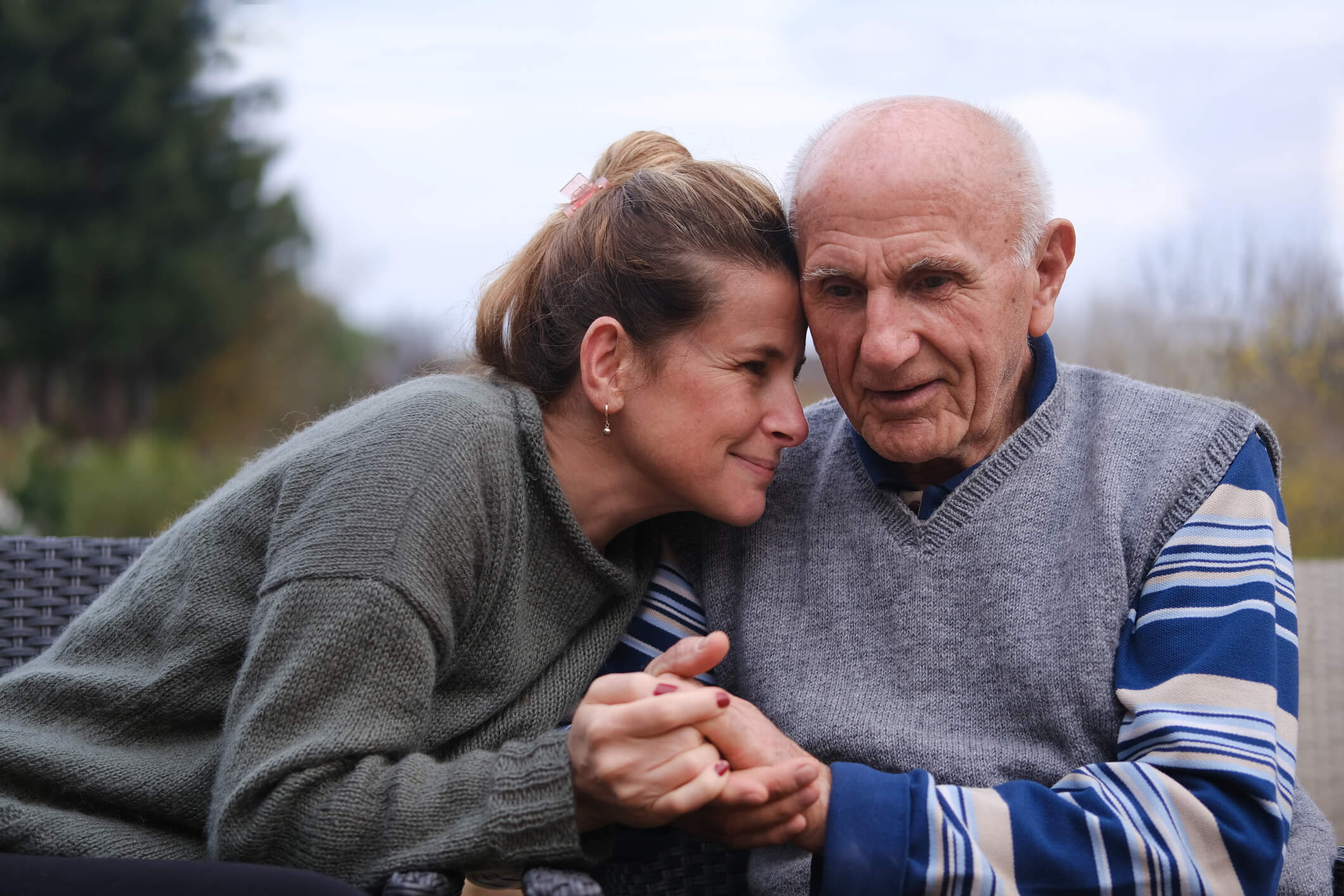
A father is talking to his adult daughter.
Casual conversation. A weekend update.
And then he mentions, almost in passing, that he’s going to another celebration of life this weekend.
And then something else.
His golf foursome—the group he’s played with for years—is now down to two.
He says it without drama.
Almost like he’s reporting on traffic or weather.
But something in the room shifts anyway.
Because the daughter hears what isn’t being said out loud.
Not just that people are passing away.
But that the fabric of his everyday life is quietly changing shape.
Fewer names.
Fewer routines.
Fewer familiar anchors.
And what used to be a full, steady rhythm of social connection is becoming smaller. More fragile. More intermittent.
This is the part that’s hard to explain to someone who isn’t in it.
Because nothing has “ended” all at once.
There is no single rupture.
Just a steady narrowing.
A world that used to stretch wider now feels more contained.
And when you’re the adult child watching this, something inside you tries to find the right emotional response.
Sadness is there, but not only sadness.
There is also a kind of quiet disbelief.
How can this be happening so gradually and still feel so significant?
What makes it more complex is that your relationship with your parent hasn’t fundamentally changed in form.
They are still your father.
Still present. Still themselves.
And yet you are now witnessing them inside a different stage of life—one that includes loss as a regular, almost expected part of the landscape.
Not dramatic loss. Ongoing loss.
The kind that accumulates without ceremony.
And so the emotional experience becomes layered.
You are still the child in relation to them.
And simultaneously, you are beginning to hold awareness of their mortality in a way you never had to before.
Those two positions don’t sit neatly together.
There is no clear instruction for how to hold both.
Caring for aging parents sometimes begins here: with the growing awareness that their world is changing and that you cannot protect them from loss.
This can carry the emotional shape of anticipatory grief.
You are not grieving your parent as though they are already gone, but you are becoming more aware of time, mortality, and the changes already unfolding.
A pattern I often see in adult children is this:
You want to respond in a way that is meaningful.
Supportive.
Present.
But there is also a quiet helplessness underneath.
Because nothing can be restored to what it was.
You cannot rebuild the foursome.
You cannot reverse the passing of time.
You cannot return the world to its earlier shape.
So the work becomes something different.
It becomes learning how to stay present with a reality that is continuously shifting.
Without trying to fix it.
Without trying to smooth it into something more comfortable.
Sometimes what helps most is not a solution, but a kind of internal permission:
“This is sad, and I don’t need to resolve the sadness for it to be valid.”
Because so often, there is pressure—subtle but real—to move past these feelings quickly.
To stay functional.
To stay positive.
To not dwell too long.
But this kind of experience doesn’t move on a schedule.
It arrives in moments.
A comment about golf.
A mention of another funeral.
A change in routine that would have gone unnoticed before.
And each time, it asks something of you.
Not action.
But recognition.
That something is changing.
And that you are now old enough to see it clearly.
What can make this even harder is that it doesn’t always get mirrored back in conversation.
Your father may not frame it as grief.
He may frame it as “just how things are now.”
And that can leave you holding more emotional weight than is being explicitly named.
So part of the internal work becomes learning how to hold meaning quietly.
To let it exist without needing it to be fully spoken.
To understand that connection doesn’t always require shared language about what is happening.
Sometimes it just requires presence.
And over time, something subtle can begin to form inside this experience.
Not acceptance in the simplistic sense.
But a different kind of seeing.
One that holds both:
- the person you’ve always known
- and the life that is now unfolding in a more finite shape
And maybe the most honest reframe is this:
You are not only watching your parents age.
You are also witnessing the story of their life continue to narrow into something more essential.
And your role is not to stop that narrowing.
But to stay connected within it.
Even when it feels unfamiliar.
Even when there are no clear words for what it stirs in you.
Just presence.
And the willingness to see it as it is.
Stay Connected
Dr. Bev Walpole is a registered Clinical Psychologist in Ontario who provides evidence-based support for women, parents, caregivers, and high-achieving individuals navigating anxiety, burnout, family caregiver stress, identity shifts, grief, and significant life transitions. Her work also integrates environment-focused wellness design, recognizing that the spaces and relationships around us can influence how supported, grounded, and regulated we feel.
If this blog resonated with you, subscribe to our blogg or follow Haven on Instagram for more conversations on caring for aging parents, caregiving, emotional wellbeing, nervous system regulation, design psychology, and creating environments that support mental health through changing seasons of life.
Whether you are already navigating the responsibilities of caring for an aging parent or are simply beginning to feel the emotional weight of watching their world change, you do not have to dismiss or resolve those feelings on your own. Reach out to Dr. Bev to help you make space for grief, anxiety, changing family roles, and the complicated emotions that can accompany a parent’s aging.